Mature Hairline vs Receding? How to Tell the Difference
Last updated on July 30, 2026
Hairlines change throughout life. Some changes are completely normal, while others may signal the early stages of hair loss. Many people look in the mirror and wonder: Is my hairline receding or maturing? The answer is not always obvious.
Both men and women can experience changes in the hairline as they age, and hormones often play a central role. In some cases, a slight shift in the hairline is part of the natural aging process. In others, it reflects progressive hair loss driven by sensitivity to testosterone and its byproduct DHT, as seen in genetic androgenic alopecia, which may continue to advance over time.
Understanding the difference between a mature hairline vs a receding hairline can help people make informed decisions about hair health and treatment options.
What Is a Mature Hairline?
A mature hairline is a natural shift in the hairline that often occurs during adulthood. It usually happens gradually between the late teens and early 30s. Many people start with a lower, straighter hairline during adolescence.
As adulthood begins, the hairline may move slightly higher and develop a more natural shape. This change is not considered hair loss. When people ask what a mature hairline is, the answer is simple. It is a normal stage of hairline development that stabilizes after the early adult years.
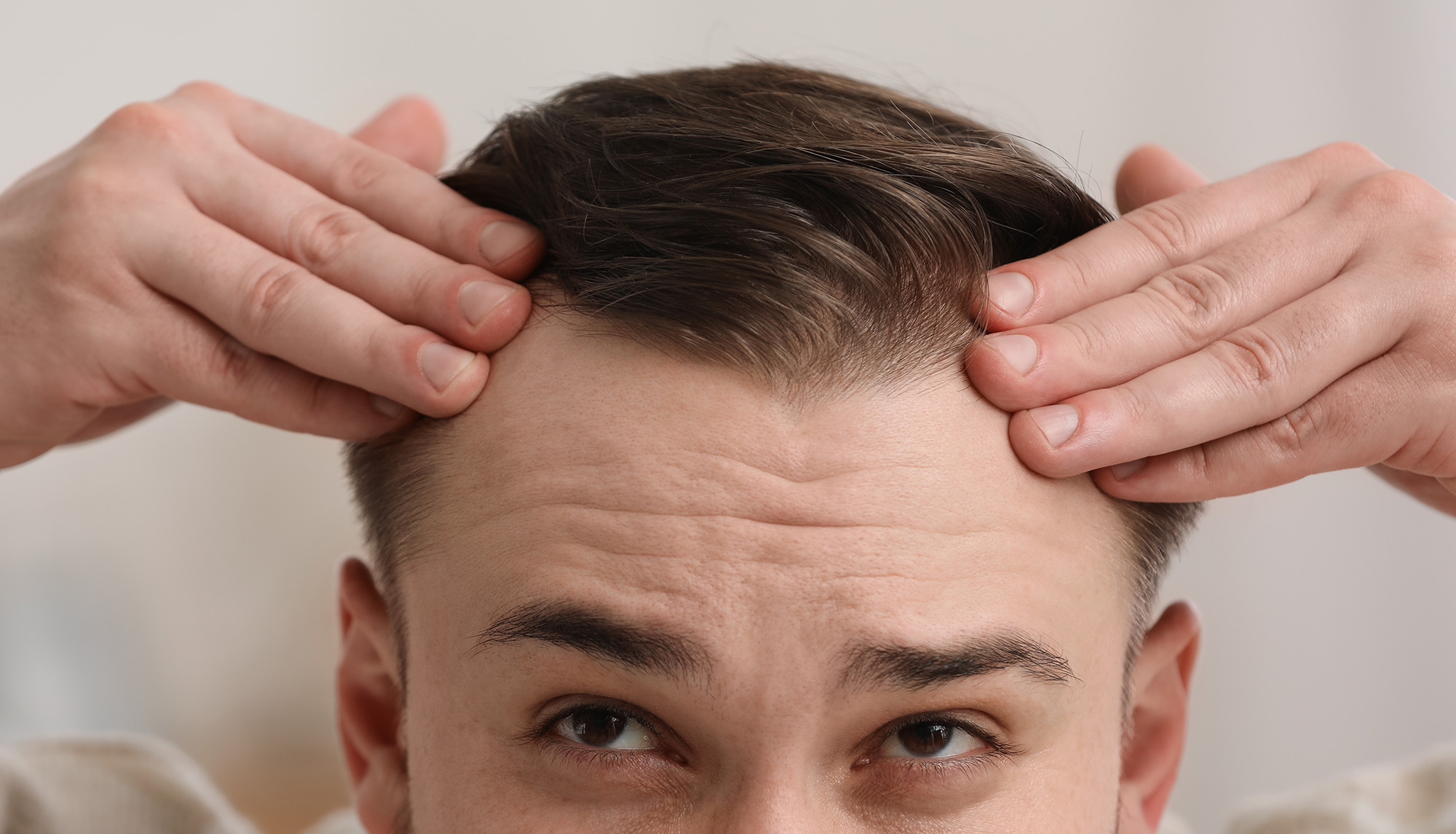
This shift often results in a subtle “M” shape in men, where the temples move back slightly while the center remains relatively intact. In women, the change is usually much less noticeable. A mature hairline typically stabilizes and does not continue moving backwards.
What Does a Mature Hairline Look Like?
Several features help distinguish it from progressive hair loss. Common characteristics include:
- A slight upward movement of the hairline
- Mild recession at the temples
- A stable hairline that stops moving backwards
- Normal hair thickness and density behind the hairline
The key point is stability. Once a mature hairline develops, it tends to remain relatively consistent for many years. Hair density also remains strong behind the hairline. The hair shafts are typically thick and healthy, without the miniaturization often associated with genetic hair loss.
When Does Hairline Start Receding?
Hairlines can begin changing at different ages, and this timing is closely linked to shifts in hormones as well as genetics. Testosterone and its more active form, dihydrotestosterone (DHT), play a key role in how hair follicles behave over time. For some individuals, these changes start in their early 20s, while for others they may not appear until their 30s or 40s, depending on how sensitive their follicles are to these hormones.
Male pattern hair loss, also known as androgenetic alopecia, can begin as early as the late teens and is strongly influenced by DHT, which gradually shrinks hair follicles. In women, hormonal fluctuations involving estrogen, progesterone, and androgens can contribute to hair thinning, which typically appears later and affects overall density rather than the frontal hairline. A mature hairline often develops first as part of normal aging. If recession continues beyond that point, it may indicate ongoing, hormone-driven hair loss.
Signs Your Hairline May Be Receding
A receding hairline occurs when hair follicles gradually shrink and stop producing strong hair strands. Over time, the hairline continues moving backwards. Several signs may suggest that the hairline change is not simply maturation.
These include:
- Ongoing hairline movement
If the hairline continues moving backwards over several years, it may indicate progressive hair loss. - Thinning hair near the temples
Hair often becomes finer and less dense before disappearing. - Increased shedding
Hair loss during washing or brushing may increase. - Loss of density behind the hairline
The hairline area may appear more transparent or sparse.
This is where many people begin asking: Does a receding hairline mean baldness? Not necessarily. A receding hairline can progress slowly and may stabilize at various stages. Some individuals develop only mild recession while maintaining strong overall coverage.
Mature Hairline vs Receding Hairline: Key Differences
Understanding the differences between a mature hairline and a receding hairline helps remove unnecessary worry.
A mature hairline usually shows:
- Slight temple movement
- Stable hairline position
- Thick hair density behind the hairline
A receding hairline often shows:
- Progressive backward movement
- Thinning hair shafts
- Reduced density behind the hairline
- Gradual enlargement of temple areas
Photographs taken several years apart can be helpful. If the hairline appears stable, the change may simply represent normal maturation.
Is a Receding Hairline Genetic?
Genetics plays a central role in pattern hair loss, particularly in androgenetic alopecia. What is inherited is not just the tendency to lose hair, but how sensitive the hair follicles are to hormones such as testosterone and its byproduct dihydrotestosterone (DHT). In individuals with this sensitivity, DHT gradually miniaturizes the follicles, leading to finer, shorter hairs and reduced density over time.
Family history can offer useful insight. If close relatives experienced early or progressive hair loss, there is a higher likelihood of seeing a similar pattern, although the timing and severity can vary from person to person.
That said, genetics and testosterone-related pathways are only part of the picture. Other factors can influence how and when hair loss develops, including:
- Hormonal shifts, including changes in testosterone, DHT, estrogen, progesterone, and thyroid hormones
- Stress, including chronic sleep deprivation or intense physical strain
- Medical conditions such as diabetes or thyroid disorders
- Nutritional deficiencies, particularly in iron, protein, and key vitamins
- Certain medications that affect the hair growth cycle
Because hair loss often involves a combination of genetic and hormonal factors alongside lifestyle or medical influences, a proper medical evaluation is recommended, especially if shedding is sudden or progressing quickly.
Hairline Changes in Women
While hairline recession is commonly associated with men, women can also experience hair loss and hairline changes. In many cases, female pattern hair loss appears as diffuse thinning rather than dramatic temple recession. The hairline itself often remains relatively intact.
However, some women notice widening of the frontal hairline or gradual thinning near the temples. These changes are often linked to hormonal shifts involving estrogen, progesterone, and androgens such as testosterone, particularly during menopause or other life stages where hormone levels fluctuate. Genetic factors can also influence how sensitive hair follicles are to these hormonal changes.
Women may also develop traction hair loss, medically referred to as traction alopecia, from tight hairstyles and heat styling or prolonged tension on the follicles, such as braids, twists, or dreadlocks. As female hair loss patterns can differ from male pattern hair loss, a proper evaluation is important to identify the underlying cause and guide appropriate treatment options.
When to Have Your Hairline Evaluated
Hairline changes can feel confusing. Many people are unsure whether what they see is normal or the beginning of hair loss.
A medical evaluation can help answer questions such as:
- Is my hairline receding or maturing?
- Does a receding hairline mean baldness?
- Is a receding hairline genetic in my case?
Hair restoration physicians examine several factors, including hair density, scalp health and follicle miniaturization. Photographic comparisons and scalp magnification may also be used to assess changes over time. Early evaluation can help identify treatable causes of hair loss and provide realistic expectations about future hairline changes.
Hair Restoration Options
If progressive hair loss is confirmed, several treatment options may be considered depending on the individual situation. Hair transplant procedures remain one of the most effective surgical solutions for restoring hairline density.
Modern techniques include:
Follicular Unit Extraction (FUE)
This method removes individual follicular units from the donor area and places them into thinning regions. This method is best for small hair transplantations and minimal anticipated hair loss.
Follicular Unit Transplantation (FUT)
This technique involves removing a strip of donor hair and dissecting it into grafts for transplantation. FUT can provide a large number of grafts in a single session.
Multiple Follicular Unit Grafting
This approach uses grafts containing multiple follicles to create density while maintaining a natural appearance.
Results vary depending on factors such as donor hair quality, hair characteristics and long-term hair loss patterns. Many patients review before-and-after photographs to better understand potential outcomes.

We carefully evaluate your hair loss with a medical assessment from Dr Arthur Zacco, reviewing your hairline, scalp health and long-term hair restoration options. Your consultation is completely free, and flexible payment plans are available to make treatment accessible.
Why Physician Evaluation Matters
Hairline restoration requires careful planning. The position, density and shape of the hairline must match the patient’s facial structure and long-term hair loss pattern. An experienced physician evaluates the donor area and determines how to preserve hair for future needs.
At AZ Hair Restoration, consultations are conducted directly with Dr Arthur Zacco, a physician who has performed hair transplantation since 1992 and has practised in Wake County since 1996.
This type of physician-led consultation allows patients to receive medical guidance rather than sales-based recommendations. Every patient’s hair loss pattern, goals and future hairline changes are considered before treatment decisions are made.
To find out more, book your free hair loss consultation today.
FAQs
What age does a mature hairline usually develop?
A mature hairline commonly develops between the late teens and early 30s. The hairline may move slightly higher, creating a more natural adult shape. Once this change occurs, the hairline typically stabilizes. If the recession continues beyond that stage, it may indicate progressive hair loss.
Does a receding hairline mean I will go bald?
A receding hairline does not always lead to complete baldness. Some individuals experience mild temple recession that stabilizes for many years. Others may develop gradual hair thinning over time. Genetics and hormones play important roles in determining progression. A professional assessment can help predict likely patterns.
Can women develop a receding hairline?
Yes. Women can experience hairline changes, although the pattern often differs from that of men. Female hair loss usually appears as diffuse thinning across the scalp rather than significant temple recession. Hormonal changes, genetics and medical conditions may contribute. A proper diagnosis is important before considering treatment.






 Online Marketing For Doctors