How Lack of Sleep Affects Your Hair Health and What You Can Do About It
Last updated on July 30, 2026
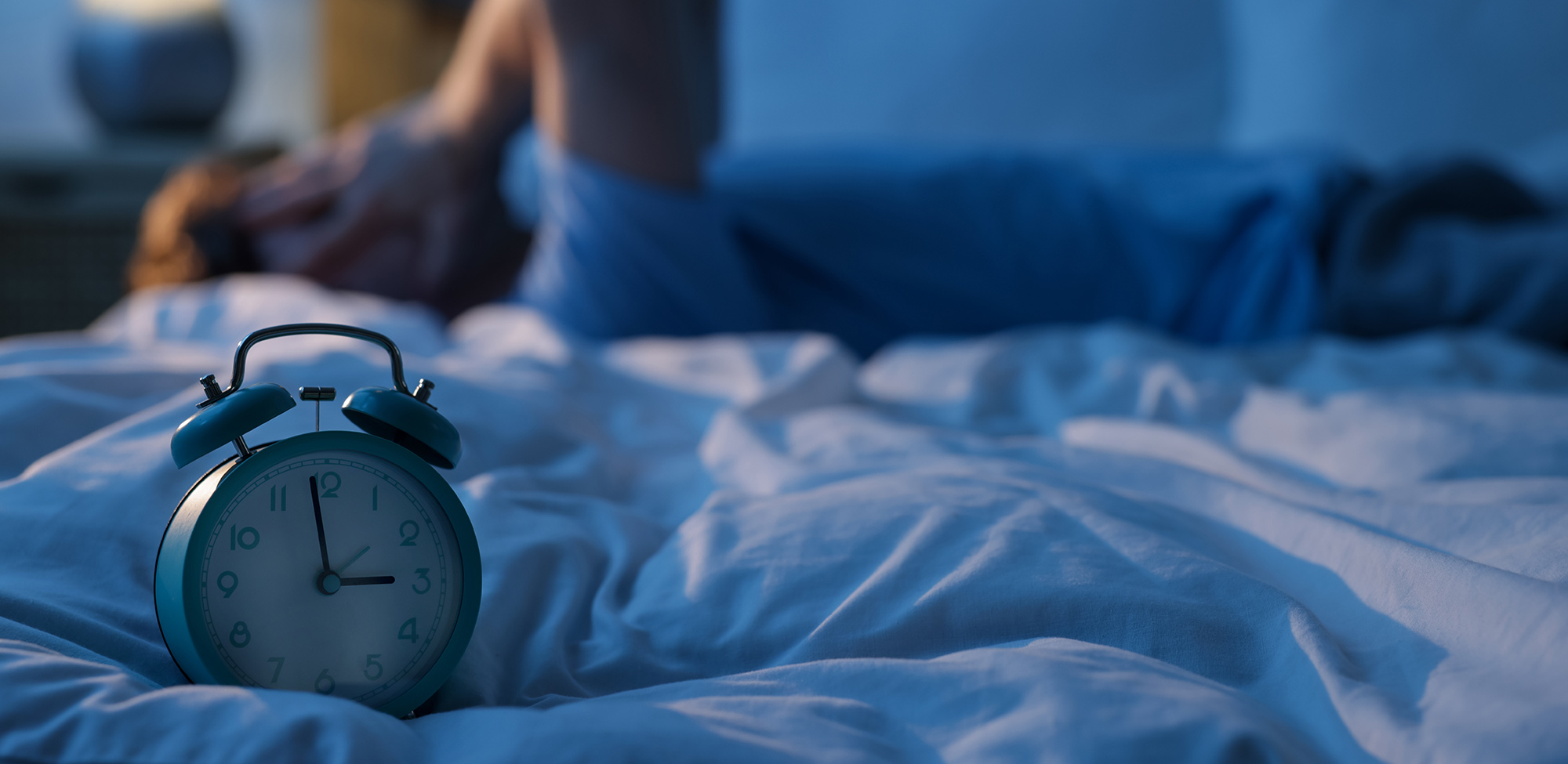
A good night’s sleep supports more than mental clarity. It plays an important role in your body’s ability to repair and grow healthy hair. Many people notice that when their sleep schedule becomes irregular, their hair starts to thin, dull, or shed more than usual. But what is really happening inside your body, and can it be reversed?
At AZ Hair Restoration in Raleigh, Dr. Arthur Zacco has helped patients understand the connection between overall health and hair growth for more than three decades. Here’s what you should know about how sleep affects your hair and what you can do to restore balance and strength to every strand.
The Science Behind Sleep and Hair Growth
Hair grows in a repeating cycle of growth, rest and shedding. These phases depend on hormones, cellular repair and blood flow, all of which are influenced by sleep.
When you consistently get deep, restorative rest, your body releases growth hormones that repair tissues and activate hair follicles. Oxygen-rich blood circulates more efficiently through the scalp, carrying nutrients that promote thickness and vitality.
When sleep is disrupted or shortened, the body produces higher levels of cortisol, a stress hormone that interferes with the natural growth cycle. More follicles enter the shedding phase, which explains why sleep and hair loss are closely linked in both men and women.
How Does Lack of Sleep Cause Hair Loss?
Consistent sleep deprivation can contribute to hair loss over time. It may not directly cause baldness, but it sets up the conditions that lead to thinning and shedding. Several changes occur in the body when sleep is limited.
- Hormonal imbalance. Low melatonin and increased cortisol slow follicle regeneration.
- Reduced protein synthesis. Hair is mostly keratin, a protein that depends on consistent cell renewal. Poor sleep limits your body’s ability to produce it.
- Restricted circulation. Less time in deep sleep means reduced blood flow to the scalp and fewer nutrients reaching the follicles.
- Increased inflammation. Inflammatory markers rise when you are sleep deprived, which can worsen scalp conditions like dandruff or seborrheic dermatitis.
If you have ever wondered, Does lack of sleep cause hair loss?, The answer is yes. Poor sleep habits can be a key factor, especially when combined with genetics, chronic stress, or nutrient deficiencies.
Is Hair Loss From Lack of Sleep Reversible?
In most cases, hair loss caused by poor sleep can improve once your body’s natural balance returns. Follicles go through growth cycles that recover when given the right conditions. However, it can take several months for visible results to appear.
The first step is to address what is disturbing your sleep. Late-night screen time, anxiety, or medical conditions such as sleep apnea can all affect rest. Adjusting your environment and routine often helps your body reset its hormonal rhythm and improve circulation.
Some people may find that their follicles have been under stress for too long to recover naturally. In these cases, medical treatments such as Growth Factor Therapy or hair transplantation can help restore density.
Does Sleeping Help Hair Growth?
Adequate sleep supports every stage of hair production. During deep sleep, the pituitary gland releases growth hormone, which helps regenerate cells that form the base of the hair shaft. This is when the body repairs itself.
A regular sleep routine, a cool dark bedroom and avoiding caffeine or alcohol before bed all contribute to better rest. When you combine these habits with proper nutrition and hydration, your hair has a stronger foundation for growth.
Is It Normal to Lose Hair While Sleeping?
Finding a few hairs on your pillow is completely normal. Most people lose 50 to 100 strands a day as part of the natural cycle. However, if you begin to notice clumps of hair or heavier shedding after nights of poor sleep, your body might be signaling that hormones or stress are affecting your scalp.
Friction can also play a role. Cotton pillowcases can absorb moisture and create static, which weakens hair cuticles. Switching to a silk or satin pillowcase can minimize breakage and help your hair stay smooth overnight.
How to Protect Your Hair When You’re Not Sleeping Well
Even if your sleep pattern is inconsistent, there are practical ways to support your hair and scalp health.
- Stimulate your scalp. A daily scalp massage encourages circulation and helps deliver oxygen and nutrients to the follicles.
- Prioritize nutrition. Include lean proteins, iron, zinc and vitamins A, D and E in your meals. These nutrients support keratin production and strengthen the hair shaft.
- Manage stress naturally. Long-term stress affects sleep and hormone balance. Light exercise, meditation, or journaling can help lower cortisol.
- Limit damage from styling. Tight hairstyles, chemical treatments and heat tools can worsen shedding when your body is already under strain.
- Get professional guidance if shedding continues. If your hair keeps thinning despite lifestyle changes, a thorough evaluation can show whether follicles remain active and what treatments can help restore growth.
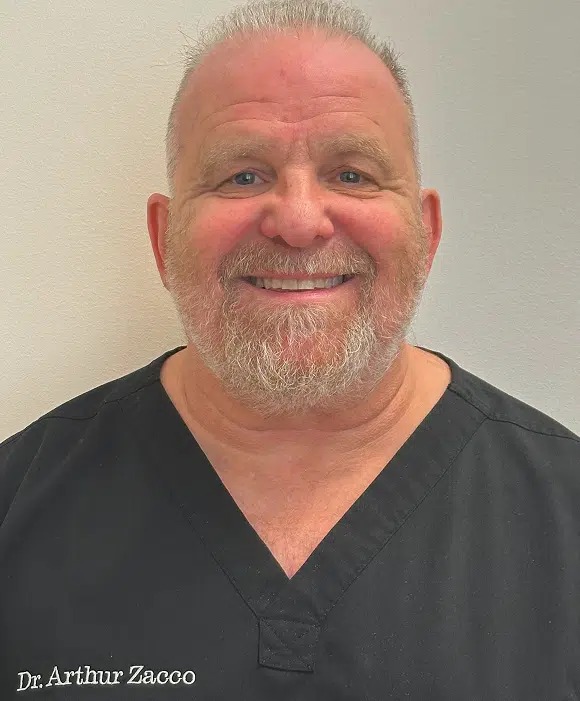
With over 30 years of experience, Dr. Arthur Zacco specializes in treating hair loss linked to stress, insomnia and poor sleep. He offers personalized, physician-led care for men and women to restore healthy, natural growth.
When to Consider Professional Hair Growth Treatment
For some patients, hair loss caused by lack of sleep overlaps with hereditary or medical factors. An experienced hair restoration physician can determine whether the follicles are still viable or permanently inactive.
The most effective medical and surgical hair loss treatment options include:
- Exosome Injections. These contain regenerative cellular components that stimulate dormant follicles and support tissue repair at the scalp level.
- Red Light Laser Therapy. A non-invasive treatment that increases blood flow, reduces inflammation and energizes follicles to promote natural growth.
- Prescription Hair Loss Medications. Topical and oral treatments rarely have satisfying results; otherwise, hair transplant doctors would not exist!
- Microneedling. This technique creates microchannels in the scalp, improving absorption of growth serums and activating follicle repair.
- FUE Hair Transplantation. Individual follicles are transplanted for natural coverage with no linear scar.
- FUT Hair Transplantation. Best when covering larger areas of thinning, offering high graft survival, low transection rate that results in the greatest hair density.
- Growth Factor Therapy. Uses the patient’s own plasma, with concentrated platelets, to stimulate follicle regeneration and promote thicker, healthier growth.
Each treatment plan is customized to match the cause and stage of hair loss. Whether your goal is to improve density, refine your hairline, or strengthen existing follicles, AZ Hair Restoration focuses on achieving natural, lasting results through proven techniques utilizing both follicular grafts and multiple follicular unit grafts.
Restoring Balance for Healthier, Thicker Hair with Our Raleigh, NC Clinic
Quality sleep is one of the simplest and most powerful ways to support hair and scalp health. Genetics and hormones play major roles, but poor rest adds another layer of stress that can overwhelm even healthy follicles.
By improving your sleep habits, nourishing your body and obtaining expert care when needed, you can repair much of the damage caused by fatigue. If you think your hair loss might be connected to your sleeping patterns, schedule a free consultation with Dr. Zacco at AZ Hair Restoration to discuss non-surgical hair growth treatments and hair transplant options.
With more than 30 years of experience in Wake County, North Carolina, Dr. Zacco helps patients primarily in Raleigh, Durham, and Chapel Hill, as well as internationally. Understand the true cause of their hair loss and choose the right approach to restore their hair. Every consultation is physician-led and focused on education and transparency so you can make informed decisions about your treatment. Book your free consult today!
FAQs
How many hours of sleep do you need for hair growth?
Most adults need between seven and nine hours of sleep each night for optimal hair growth. During deep sleep, your body releases growth hormones and increases scalp circulation, helping follicles stay active. If you consistently sleep less, your hair may weaken and shed more easily. AZ Hair Restoration in Raleigh, NC, can help restore balance through medical treatments such as Growth Factor Therapy and hair transplantation. Book a free consultation with Dr. Arthur Zacco for personalized advice.
Are there medical treatments for hair loss caused by sleep deprivation?
Yes, several effective treatments are available for sleep-related hair loss. Options include exosome injections to rejuvenate follicles, red light laser therapy to improve circulation and Growth Factor Therapy to encourage regrowth naturally. For more advanced cases, FUE or FUT transplants can restore fuller coverage. Dr. Arthur Zacco and his Raleigh-based team at AZ Hair Restoration offer free consultations to identify which treatments are best suited to your needs and goals.
Can insomnia cause hair loss?
Yes, insomnia can lead to increased hair loss over time. When the body is deprived of deep, restorative sleep, it produces more cortisol, a stress hormone that disrupts follicle activity and slows growth. Over time, this imbalance can cause noticeable thinning or shedding. AZ Hair Restoration in Raleigh, NC, offers medical hair growth treatments such as Growth Factor Therapy, red light laser therapy and exosome injections. Schedule a free consultation with Dr. Arthur Zacco to discuss your options.
How long does it take for hair to recover after improving sleep?
Hair typically begins to recover within three to six months of consistent, quality sleep. The timeline depends on your overall health, age and the extent of follicle stress. Medical treatments can accelerate results by stimulating inactive follicles. AZ Hair Restoration in Raleigh, NC, provides options such as microneedling, Growth Factor Therapy and transplantation. Dr. Arthur Zacco offers free hair loss consultations to help design a treatment plan that supports long-term scalp and hair recovery.



 Online Marketing For Doctors