What Causes Hair Loss in Women? Hormones, Menopause and Treatment Options
Last updated on August 27, 2026
Quick answer: Female hair loss rarely has a single cause. Genetics, hormonal change, nutritional deficiency, stress, scalp conditions and medications commonly overlap. It also looks different from male hair loss: women usually keep the frontal hairline and lose density across the top instead, which makes it easy to miss early. Menopause is one of the most common triggers, and treatment works best while follicles are still active.
How Female Hair Loss Looks Different
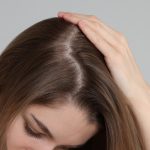
Men typically recede at the temples and thin at the crown until the two areas meet. Women rarely follow that pattern. The frontal hairline usually stays intact while density falls across the top of the scalp, so the first signs are a widening part line, a ponytail that feels thinner, or less volume at the crown.
Because the change is gradual and diffuse rather than a visible bald patch, women often live with it for a year or more before seeking assessment. That delay matters, because follicles respond far better to treatment while they are still producing hair.
When Does Hair Thinning Start?
There is no fixed age. Some women notice changes in their late twenties or thirties, others not until around menopause, and many are unaffected well into their fifties. For a large share, the first signs appear between 30 and 50. Genetics, hormones, general health and life events all influence the timing.
Shedding 50 to 100 hairs a day is normal for everyone. What warrants attention is a sustained increase, or thinning you can see rather than just feel.
The Most Common Causes
Female pattern hair loss
The most frequent cause, and a genetic one. Follicles inherit a sensitivity to hormones and gradually shrink, so each new hair grows finer than the last until some follicles stop producing visible hair. Androgenetic alopecia develops slowly but consistently without intervention, which is why early treatment makes a considerable difference.
Menopause
Estrogen and progesterone keep follicles in the active growth phase longer. As levels fall through perimenopause and menopause, the cycle shortens and more follicles move into resting, which produces increased shedding a few months later.
Androgen levels may not actually rise, but the ratio between hormones shifts, and follicles become more sensitive to androgens. That sensitivity drives miniaturization, producing progressively finer and shorter strands. Women with a family history of thinning tend to notice the change sooner and more sharply.
Menopausal thinning typically shows as a wider part, reduced volume at the crown and a thinner ponytail, often with a change in texture as hair becomes drier or more brittle. The frontal hairline usually holds.
Other hormonal triggers
Pregnancy and the postpartum period, stopping oral contraceptives, thyroid disorders and polycystic ovary syndrome all shift follicles into resting and cause shedding two to three months later. Thyroid disease is worth testing for specifically, since both overactive and underactive thyroid cause hair loss and both are treatable.
Nutritional deficiency
Hair is metabolically demanding tissue. Low iron, inadequate protein, low vitamin D and insufficient zinc or iodine all shorten the growth phase. Iron deficiency is particularly common in women through menstrual blood loss and pregnancy, and is well documented as a cause of diffuse shedding. Ferritin, which measures stored iron, is often more revealing than an iron level alone.
Stress and telogen effluvium
Illness, surgery, childbirth, bereavement or sustained emotional stress can push many follicles into resting simultaneously. Shedding follows three to four months later, which is why the connection is so often missed. It is usually temporary once the trigger resolves. Chronic sleep disruption contributes and is easy to overlook.
Scalp conditions and medications
Inflammation, seborrheic dermatitis and chronic scalp irritation interfere with normal growth and need targeted treatment. Chemotherapy, blood pressure medications, antidepressants and hormonal treatments can all cause shedding, which usually reverses once the drug is changed or stopped, provided the follicle is intact.
How Female Hair Loss Is Diagnosed
Because several causes usually overlap, assessment matters more here than in male pattern loss. A physician examines the pattern and distribution of thinning, hair shaft diameter and follicle miniaturization, scalp health and inflammation, and reviews family history, medications and hormonal or metabolic health. Blood tests covering thyroid function, iron studies and hormone levels are commonly part of it.
The key question is whether follicles are dormant, miniaturizing or permanently inactive. Dormant and miniaturizing follicles respond to regenerative treatment. Inactive ones need transplantation. That distinction shapes everything that follows.
Non-Surgical Treatment Options
- Growth Factor Therapy. Uses growth factors concentrated from your own blood, injected into thinning areas to stimulate follicles back into the growth phase. Delivered as a course of sessions with no downtime.
- Microneedling. Creates microchannels that trigger repair responses and improve absorption of topical treatments. Often combined with Growth Factor Therapy.
- Red light laser therapy. Supports circulation and cellular energy in the follicle, used consistently over time as part of a combined plan.
- Exosome therapy. Delivers regenerative signaling particles to support follicle function in early to moderate thinning.
- Topical medications. Improve blood flow to the follicle and prolong the growth phase, generally working best alongside other treatments.
All of these depend on live follicles. None restore hair in areas that have gone completely bald, and any underlying cause such as low iron or thyroid disease needs correcting alongside them or results will be limited.
Hair Transplantation for Women
Where follicles have permanently stopped producing, female hair transplantation redistributes follicles from a stable donor area into thinning regions. Transplanted follicles keep their resistance to the hormonal sensitivity driving the loss, so results are permanent and the hair grays naturally with the rest.
FUT is often the preferred technique for women. Because the donor hair stays long, most patients do not need their hair cut short even for large procedures, which matters a great deal to women wanting to keep their hairstyle through recovery. FUT also allows two graft types to be produced: multiple follicular unit grafts, which build density well in female pattern thinning, and single follicular units for a natural, feathery hairline. The donor scar is linear and designed to sit concealed within the hair.
FUE remains an option and leaves small dot-shaped marks rather than a line, though harvesting reduces density across the donor area, which some women notice in a ponytail. Which technique suits you depends on your pattern, donor quality and how you wear your hair.
Protecting the Hair You Have
- Prioritize protein, iron, zinc, vitamin D and omega-3 fats, and test rather than guess at deficiencies
- Avoid tight hairstyles, aggressive brushing and high heat, which add traction and breakage
- Space out coloring and chemical treatments and choose gentler formulations
- Keep the scalp clean and calm, treating any irritation or flaking early
- Manage stress and protect sleep, both of which influence the growth cycle
- Act on thinning early rather than waiting to see whether it settles
Female Hair Loss Treatment in Raleigh, NC
At AZ Hair Restoration you meet directly with Dr. Zacco, who reviews your pattern of loss, scalp health, family history, medical factors and treatment history before recommending anything. Where follicles remain active, non-surgical hair loss treatments can slow shedding and improve density. Where they no longer produce, FUT and FUE hair transplants restore coverage permanently. Because female thinning often involves several overlapping causes and different types of alopecia, the evaluation comes first.
Dr. Zacco has performed hair transplantation since 1992 and has practiced in Wake County, North Carolina, since 1996. To understand what is driving your thinning, schedule a free consultation at our Raleigh clinic or call 919-830-3778.
Frequently Asked Questions
What causes hair loss in women?
Hair loss in women rarely has one cause. Genetics is the most common driver, in the form of female pattern hair loss. Hormonal change from menopause, pregnancy, thyroid disorders or PCOS is the next most frequent. Nutritional deficiency, particularly iron, physical or emotional stress, scalp conditions and certain medications all contribute. Most women have more than one factor at work.
How is female hair loss different from male pattern baldness?
The pattern differs. Men typically recede at the temples and thin at the crown, and the two areas eventually merge. Women usually keep the frontal hairline and instead lose density across the top, showing as a widening part line and a thinner ponytail. Because the loss is diffuse rather than patterned, it is often missed for longer.
Does menopause cause hair loss?
It frequently contributes. Estrogen and progesterone keep follicles in the growth phase longer, so as levels fall the cycle shortens and more follicles move into resting, which increases shedding. Androgen levels may not rise, but the ratio shifts and follicles become more sensitive, causing miniaturization and progressively finer strands. Genetics, thyroid changes and nutrition often compound the effect.
At what age does hair start thinning in women?
There is no fixed age. Some women notice changes in their late twenties or thirties, others not until around menopause, and many stay unaffected well into their fifties. The first signs are usually a widening part, reduced volume at the crown, finer strands, or more shedding when brushing or washing rather than a visible bald area.
Can thinning hair in women be reversed?
It often can, depending on the cause. Shedding driven by stress, illness, childbirth or a nutritional deficiency usually recovers once the trigger is resolved. Menopausal and genetic thinning are progressive and need ongoing management rather than a one-time fix, though early treatment preserves considerably more density. Follicles that have stopped producing entirely need transplantation.
What treatments work for female hair loss?
It depends on whether follicles are still active. While they are, Growth Factor Therapy, microneedling, red light therapy, exosome therapy and topical medications can support regrowth. Where follicles have stopped producing, hair transplantation restores density permanently. Any underlying cause such as low iron or a thyroid disorder needs correcting alongside, or results will be limited.
Are women good candidates for hair transplants?
Many are, particularly where thinning affects the part line or crown and the donor area at the back of the scalp remains stable. FUT is often preferred for women because the donor hair stays long, so most patients keep their existing hairstyle rather than cutting it short. Candidacy depends on donor quality and whether the loss has stabilized, which the consultation assesses.
Medical Disclaimer
The content of this article is provided for general information and educational purposes only. It is not medical advice, and it is not a substitute for diagnosis or treatment by a qualified healthcare professional. Reading this page does not create a doctor and patient relationship. Individual results vary considerably, and female hair loss frequently involves several overlapping causes that only an in-person assessment can separate. Nutritional supplements should follow testing rather than assumption, and no prescribed medication should be started, stopped or changed without speaking to your doctor. Always consult a physician regarding any medical concern, particularly if shedding is sudden, severe, or accompanied by other unexplained symptoms.
Reviewed for medical accuracy by Dr. Zacco, AZ Hair Restoration, Raleigh, NC.




 Online Marketing For Doctors